Stool and SIBO Testing
Almost everyone can benefit from digestive testing to get an in depth assessment of their gut health, even if it is not their primary concern. We highly recommend testing for individuals who have been dealing with chronic gut issues for years and/or gut health issues that are impacting quality of life. Some conditions that warrant stool testing include:
- Autoimmune diseases
- IBS/IBD
- Digestive complaints, diarrhea or constipation
- Brain fog
- Skin problems, like acne and psoriasis
- Mood disorders, depression, and anxiety
- Diabetes and weight loss issues
Comprehensive Stool Testing
The GI-MAP from Diagnostic Solutions is a comprehensive stool test that detects parasites, bacteria, and fungi in the gastrointestinal tract by measuring the DNA of the organisms present in your stool. The test also assesses inflammation, pancreatic function, the immune response in the gut, and more!
The results of the GI-MAP allow our dietitians to create personalized treatment protocols to address gut dysfunction based on which infections are urgent, which areas of the gut are already optimized, and which areas should be addressed after an infection is resolved.
Almost everyone can benefit from a GI-MAP to get an in depth assessment of their gut health, even if it is not their primary concern.

What’s included in the GI-MAP report?
- Pathogens
- H.Pylori
- Commensal Bacteria
- Opportunistic Microbes
- Fungi, Yeast, & Viruses
- Parasites
- Intestinal Health Markers
We also offer testing for the Genova’s GI Effects Comprehensive Stool Profile. This provides immediate, actionable clinical information for the management of gastrointestinal (GI) health using cutting-edge technologies and biomarkers. In other words, stool testing takes much of the guesswork out of supplementation, nutrition, and lifestyle changes needed to improve gut health.
GI Effects® is a comprehensive assessment of complete gut health, assessing the root cause of most GI complaints. The GI Effects Stool Profiles can reveal important information about the root cause of many common gastrointestinal symptoms and non-GI conditions including:
- Gas
- Bloating
- Indigestion/ reflux
- Abdominal pain/ cramps
- Diarrhea
- Constipation
- Inflammatory Bowel Disease (IBD)
- Irritable Bowel Syndrome (IBS)
- Atopic dermatitis/ eczema
- Allergies
- Autoimmune diseases
- Mood disorders (depression)
- Joint aches
- Diabetes
- Weight issues
Pathogens
A pathogen is an organism that causes disease to its host.
The GI-MAP looks for various bacterial, parasitic, and viral pathogens commonly known to cause inflammation in the stomach and intestines.
These organisms are NOT supposed to be present in the gut. If a pathogen is found, a protocol will likely be implemented to clear it out.

H.Pylori
H. Pylori is a type of bacteria that can infect the stomach and first part of the small intestine. It is a common root cause of heartburn, GERD, low stomach acid, and ulcers.
Nearly 50% of the world’s population may have H. pylori and many carriers are asymptomatic. In high amounts, H.pylori infection can cause ulcers, chronic inflammation of the stomach, and stomach cancer.
Virulence factors identify more pathogenic strains of H.Pylori with a higher potential for disease.

Commensal Bacteria
There are trillions of bacteria that live in our gut and play an important role in overall health. Commensal bacteria are beneficial strains of bacteria that SHOULD be present in the gut.
Commensal bacteria maintain gut barrier function, produce vitamins (biotin and vitamin K), and protect against colonization of potential pathogens.
Having an optimal balance of commensal bacteria is most beneficial. Too low or too high of commensal bacteria can cause uncomfortable digestive symptoms and suboptimal gut health.

Opportunistic Microbes
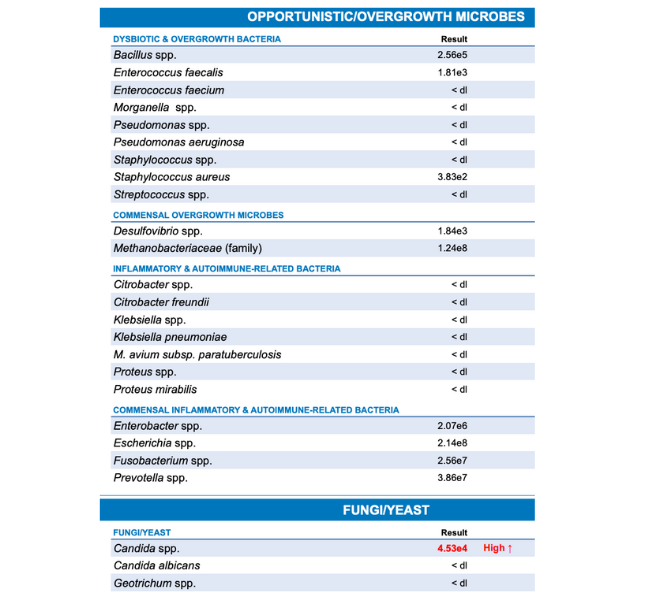
Opportunistic pathogens can cause disease and illness in some individuals if they are present in high amounts.
Having low amounts of these microbes can be normal in the stool. When overgrown, these bacteria can cause inflammation and digestive symptoms such as diarrhea, loose stools, abdominal pain, or constipation.
Overgrowth and excessive colonization by opportunistic bacteria may occur when the commensal bacteria are impaired by poor diet, antibiotic use, parasitic infection, or a weakened immune system.
Fungi, Yeast, & Viruses
Fungal organisms are commonly found in the human digestive tract, but overgrowth can cause illness.
Yeast overgrowth may be due to antibiotic use, high intake of sugar/starches, low stomach acid, impaired immune function or dysbiosis in the gut.
Candida overgrowth in the gut can cause recurrent vaginal yeast infections.
Positive findings of Cytomegalovirus and Epstein-Barr Virus indicate an active infection, not a past infection.

Parasites
Parasite are organisms that live and feeds on a host organism at the expense of the host.
The GI-MAP tests for pathogenic parasites and protozoa most commonly occurring in the GI tract.
Sources of exposure should be identified and eliminated to prevent reinfection.

Intestinal Health Markers
- Steatocrit: measures the amount of fat in the stool.
- Elastase-1: measures pancreatic function.
- β-Glucuronidase: elevated levels may indicate dysbiosis & poor detoxification.
- Occult Blood: looks for blood in the stool.
- Secretory IgA: first line of defense against pathogens in the gut.
- Anti-Gliadin IgA: elevated levels indicate an immune response to dietary gluten.
- Eosinophil Activation Protein: elevated levels indicate inflammation driven by food allergies/sensitivities, IBD, & parasitic infection.
- Calprotectin: gold standard marker for the diagnosis & monitoring of IBD.
- Optional Add-On:
- Zonulin: marker for intestinal permeability (aka “leaky gut”).
SIBO Testing
SIBO is an abnormal accumulation of bacteria in the small intestine. Overgrowth of bacteria in the small intestine can lead to chronic bloating, abdominal pain, gas, diarrhea and/or constipation. SIBO is one of the most common root causes of IBS that can be diagnosed through a breath test.
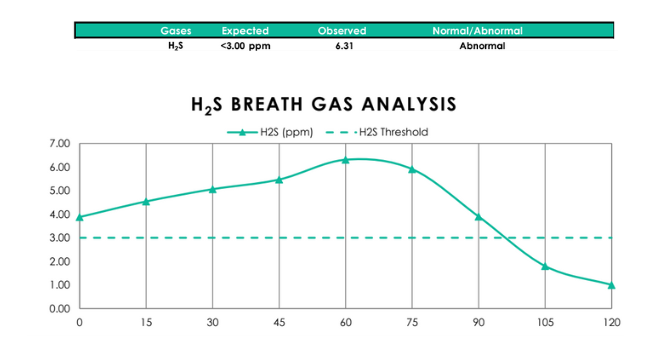
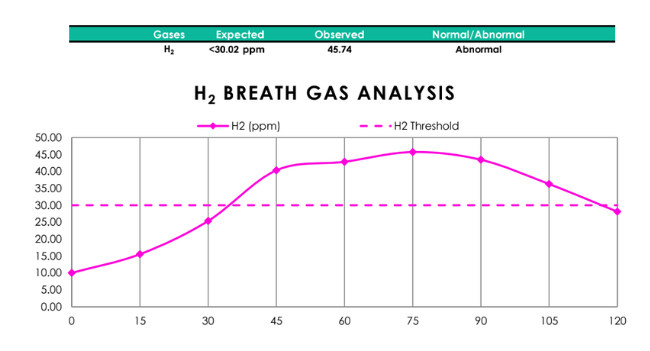
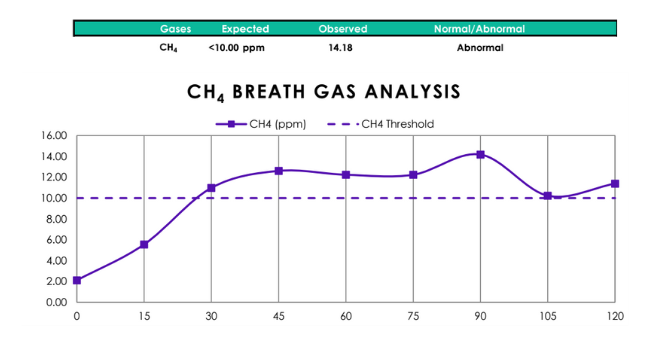
The trio-smart breath test is currently the only breath test that looks for all three types of SIBO (small intestinal bacterial overgrowth). The test is performed by measuring levels of Hydrogen (H2), Methane (CH4), and Hydrogen Sulfide (H2S) in the breath of patients collected every 15 minutes for 3 hours after lactulose or glucose consumption. (See screenshots of test results below.)
Breath testing measures levels of hydrogen, methane, and hydrogen sulfide after a you drink a sugary solution (lactulose or glucose). After the sugary solution is consumed, the bacteria in the gut eat the sugar and release specific gases. If there is an overgrowth of bacteria, excess gas will be produced, which is detectable with a breath test.
We also offer Genova’s Small Intestinal Bacterial Overgrowth (SIBO) Breath Testing to identify this common clinical condition to further guide GI symptom management and tackle the root causes of certain symptoms. Both tests are non-invasive and can be collected in the comfort of your home. Set-up your test with one of our registered dietitians today!


Who would benefit from SIBO testing?
Individuals frequently experiencing the following symptoms should consider breath testing:
- Bloating
- Distention
- Abdominal pain
- Gas
- Flatulence
- Diarrhea
Hydrogen Dominant
A rise in H2 (hydrogen gas) levels of ≥ 20.00 ppm from baseline within 90 minutes is supportive of SIBO. The “Expected” threshold of H2 is calculated by adding 20.00 ppm to the baseline sample. trio-smart reports the “Observed” peak within 100 minutes to account for variability in the sample collection process.
Methane Dominant
The “Expected” threshold for CH4 (methane) is always 10.00 ppm. The North American Consensus defines abnormal levels of CH4 as ≥10.00 ppm at any point during the breath test.
Hydrogen Sulfide Dominant
The “Expected” threshold for H2S (hydrogen sulfide gas) is always 3.00 ppm. Levels of H2S ≥3.00 ppm at any point during the breath test are considered excess.