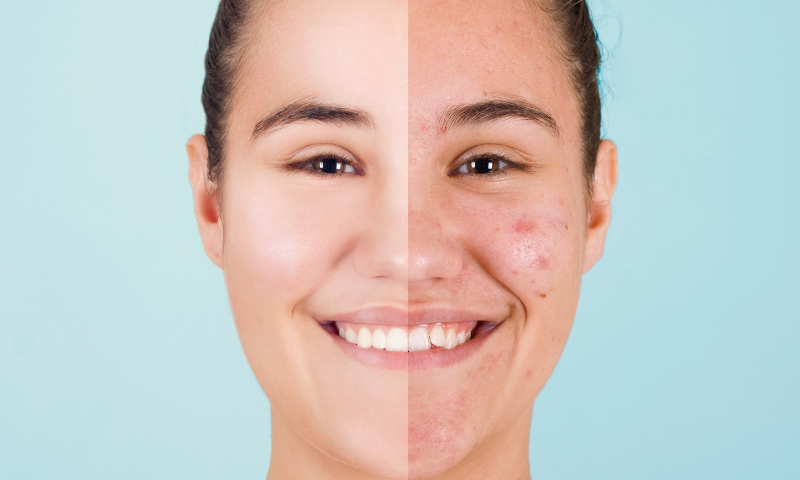
Let’s talk about acne. Acne is an inflammatory skin condition where hair follicles become clogged with dirt, oil, and/or dead skin cells. Acne forms when an overproduction of sebum or keratin clogs pores. Sebum is an oily substance that can build up and clog pores due to genetics or hormonal imbalances. Whereas, keratin is a protein that makes up your hair, skin, and nails. Too much keratin can cause dead skin cells to stick together and become trapped in the pore.
Keep reading to learn about the driving force behind the 6 different types of acne, signs and symptoms to watch out for, and appropriate lab tests for each one.
The 6 Different Types of Acne:

#1: Hormonal Acne
Driven by insulin, androgens, estrogen, or progesterone
Signs/Symptoms:
- Acne primarily located on cheeks/jawline
- Mostly cystic (deep, red, inflamed) acne
- Flare ups may occur with high dairy, sugar, or soy consumption
- Flare ups may occur around menstrual cycle
Lab tests to consider:
- Fasting Insulin
- IGF-1
- Full hormone panel: Free Testosterone, DHEA-S, LH, FSH, Prolactin, Estrogen, Progesterone
- Full thyroid panel: TSH, Free T3, Free T4, Reverse T3, Anti-TG antibody, Anti-TPO antibody
- DUTCH test
#2: Infection Acne
Driven by gut issues or infection on the skin
Signs/Symptoms:
- Often located on the forehead, back, chest, hairline, jaw, or shoulders
- May have flare ups with heat/sweating
- Acne may be itchy or inflamed
- May get worse or improve with antibiotics
Lab tests to consider:
- Comprehensive stool test (look for pathogens or inflammation)
- GI Map (Diagnostic Solutions)
- GI Effects (Genova Diagnostics)
- Skin test with Dermatologist (swab acne spot to check for infection)
#3: Irritant Acne
Driven by a reaction to topical products or other items touching the skin
Signs/Symptoms:
- Acne may be located all over (cheeks, forehead, back, chest, hairline)
- Acne may be inflamed, itchy, and red
- May have flare-ups with topical products or culprit irritant
Lab tests to consider:
- Allergy testing
- MRT food sensitivity testing
#4: Inflammatory Acne
May be driven by food sensitivities, poor gut health, or other underlying inflammation.
Signs/Symptoms:
- Acne may be located all over (cheeks, forehead, back, chest, hairline)
- Acne may flare up randomly or may be consistently flared
- May have flare-ups with foods other than dairy, sugar, and soy
Lab tests to consider:
- Comprehensive stool test
- GI Map (Diagnostic Solutions)
- GI Effects (Genova Diagnostics)
- MRT food sensitivity testing
- CRP (blood inflammatory marker)
#5: Stress Acne
May be driven by food sensitivities, poor gut health, or other underlying inflammation.
Signs/Symptoms:
- Acne may be located all over (cheeks, forehead, back, chest, hairline)
- Acne may flare up randomly or may be consistently flared
- May have flare-ups with foods other than dairy, sugar, and soy
Lab tests to consider:
- Comprehensive stool test
- GI Map (Diagnostic Solutions)
- GI Effects (Genova Diagnostics)
- MRT food sensitivity testing
- CRP (blood inflammatory marker)
#6: Combination Acne
Most people have more than one type of acne. Typically, one type is most dominant and should be the main focus of treatment.
Signs/Symptoms:
- Vary based on the different types of acne present.
Lab tests to consider:
Address the most dominant type of acne first.
We hope you enjoyed this blog post “What You Need to Know About the 6 Different Types of Acne.” Let us know what information you found helpful in the comments below.
Are you interested in booking an appointment at Clem&Thyme Nutrition? We have three convenient locations in the state of Ohio – our flagship office in Yellow Springs and extension offices in Upper Arlington and Westerville in the Columbus area. We also offer virtual sessions and online programs. You can learn more about our registered dietitians to find the right fit for you. Click here to get started.

