
Before we jump into the important role selenium and zinc play in the thyroid, we need to first understand their connection to hormone production. The thyroid produces two key hormones: T4 (inactive form) & T3 (active form). The majority of thyroid hormone production is dedicated to T4. The thyroid gland itself produces only about 20% of the body’s T3. Where does the other 80% of T3 come from? T3 is created from T4 by a process called deiodination (a fancy name for removing an iodine molecule) occurs to make thyroid hormone biologically active so our body can use it. The body needs adequate nutrition and optimal health for this conversion to occur. Nutrient deficiencies, heavy metal exposure, inflammation, and more can negatively impact the process. When our body does not have enough active T3 to use, this is where undesirable symptoms of hypothyroidism start to creep in.
What are T4 & T3?
Thyroxine (“T4”) is the inactive form of thyroid hormone primarily produced by the thyroid gland. T4 plays a role in metabolism, mood, & body temperature. The body must convert T4 to T3 before it can be used.
Triiodothyronine (“T3”) is the active form of thyroid hormone. The thyroid produces little T3. The majority of T3 is made from T4. T3 plays a role in regulating digestion, muscle control, brain function, bone health, and heart function.
Why does conversion of T4 to T3 matter?
The body must convert T4 into T3 in order to use it. If the conversion of T4 to T3 is poor, then symptoms of hypothyroidism such as fatigue, depression, sensitivity to cold temperatures, and difficulty concentrating are likely to occur.
Factors that influence T4 to T3 conversion:
- Nutrient status
- Inflammation
- Endocrine disruptors
- Cortisol
- Gut health
- Heavy metals
- Genetics
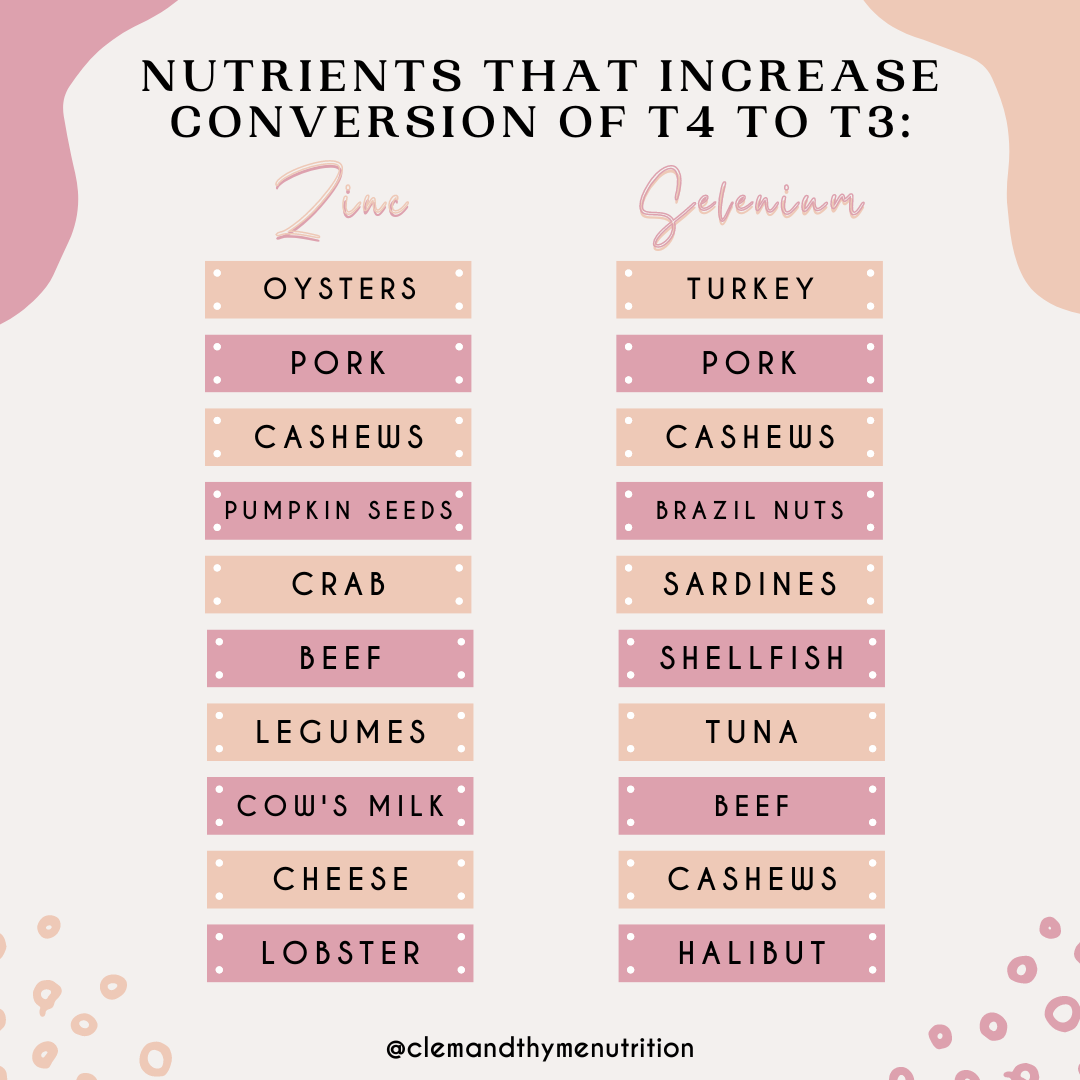
TWO nutrients that increase conversion of T4 to T3 & foods you can find them in:
Consuming foods that contain the following two nutrients will support this essential conversion of T4 to T3 for proper thyroid hormone production.
- Selenium
- Brazil nuts
- Pork
- Beef
- Turkey
- Sardines
- Shellfish
- Tuna
- Cashews
- Halibut
- Zinc
- Oysters
- Pork
- Beef
- Legumes
- Cashews
- Cow’s mik
- Pumpkin seeds
- Cheese
- Crab
- Lobster
We hope you enjoyed this blog post, “The Important Role Selenium and Zinc Play in the Thyroid.” Which foods are you adding to your plate?
Are you interested in booking an appointment at Clem&Thyme Nutrition? We have two convenient locations in the state of Ohio – our flagship office in Yellow Springs and an extension office in Westerville. We also offer virtual sessions and online programs. You can learn more about our registered dietitians to find the right fit for you. Click here to get started.

